Exciting news! I’m delighted to share our new paper, recently published in Marine Micropaleontology (Vol. 204, article 102557): “Fossil remains of ciliates (phylum Ciliophora): a recommendation for their treatment under the International Code of Nomenclature for algae, fungi and plants.”
Together with an international team of colleagues — Martin J. Head, Kenneth N. Mertens, Pieter R. Gurdebeke, Ophélie David, Anne de Vernal, Vincent Iratçabal, Audrey Limoges, Fabienne Marret, Pjotr Meyvisch, Aurélie Penaud, Vera Pospelova, Taoufik Radi, Nicolas Van Nieuwenhove and Vincy Y. Winifred, many of whom I met at the International Workshop on Ciliate Cysts in Concarneau — we tackle a tricky taxonomic question: how should fossil ciliate remains be classified?
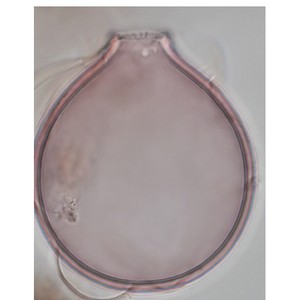
Ciliates are single-celled protists found across marine, freshwater and terrestrial environments. Their fossil traces — mostly resting cysts and loricae — turn up regularly in palynological samples, but because we usually can’t link them with certainty to a living species, they don’t fit comfortably under the zoological rules used for the group today. In this paper we argue that these fossil forms should instead be governed by the botanical Code (the rules used for algae, fungi and plants), which allows for “dual nomenclature”: separate, stable names for fossil material and its living counterparts. We also revisit the genus Halodinium, propose fossil-genus status for Hexasterias and Radiosperma, and highlight Cyclopsiella as a likely ciliate-cyst lineage reaching back as far as the Jurassic.
It’s a small but useful step toward clearer, more consistent taxonomy for a group that’s often overlooked in the fossil record.
Leave a Reply
You must be logged in to post a comment.